Why Healthcare AI Is Entering Its Governance Era

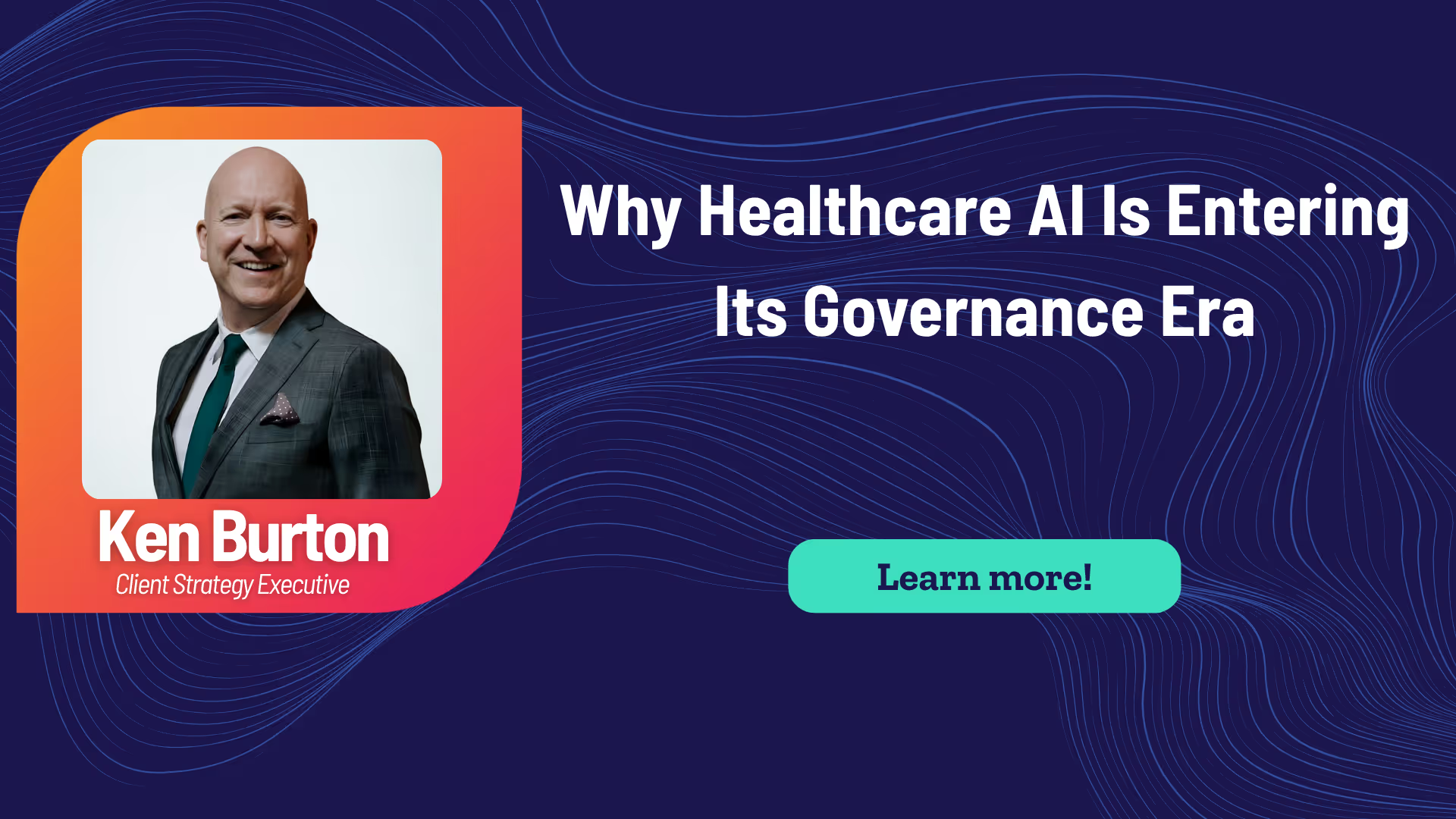
By Ken Burton, Client Strategy Executive (former health system CTO)
For nearly a decade, healthcare systems have adopted “best-of-breed” AI strategies — using specialized tools to meet clinical, operational, and analytical needs. The goal was to innovate quickly and let departments choose the most effective solutions.
In practice, this approach has created the very complexity CIOs are now trying to reduce. Each new point solution adds cost, integration overhead, and governance risk. Maintaining them is a constant struggle. Especially as systems scale, local (and federal) regulations tighten, and AI enters the clinical workflow.
Healthcare is entering a new platform era for AI, one defined by integration, standardization, and governance. CIOs and digital leaders are now prioritizing technologies that simplify, secure, and scale existing systems. This shift delivers measurable outcomes: reduced cost per visit, improved clinician satisfaction, and lower error rates.
From Fragmentation to Integration
Disconnected tools with unique data models, interfaces, and vendor support create inefficiency and security gaps.
Integrated platforms address these challenges by consolidating capabilities into unified frameworks that connect data, workflows, and governance. The result is speed, visibility, and trust that individual tools cannot achieve. In contrast, organizations that remain fragmented face higher costs and slower progress — lacking the transparency of a true Governance Suite.
Governance Before Acquisition
The era of buying technology before defining requirements is over. Modern CIOs now lead with governance and alignment, asking critical questions before approving new investments:
- What problem are we solving?
- How does this align with our enterprise strategy and patient-care goals?
- Who owns the outcomes and accountability?
These questions ensure that every decision connects to organizational priorities and measurable value. Governance is not a barrier to innovation. It’s a framework that enables pilot-to-scale progress, balancing speed with safety. When technology choices are guided by governance, organizations deploy and expand solutions with confidence and continuity.
People and Process Before Platforms
Technology rarely fails because of the tool itself. It fails when people and processes aren’t ready for it.
True digital transformation requires clarity of ownership, accountable workflows, and readiness for change. Technology amplifies existing conditions — whether strengths or gaps. Without governance and process alignment, even advanced platforms struggle to deliver meaningful results.
Simplicity, Cost Control, and Accountability
Health systems are under pressure to do more with less. CIOs must balance innovation with financial discipline. The solution isn’t to add more tools, it’s to achieve more through simplification.
Governance Suites reduce clinician burnout, accelerate diagnosis, and support both fiscal responsibility and patient care. Tangible benefits include:
- Lower total cost of ownership through reduced licensing and maintenance
- Unified support structures that reduce IT burden
- Clear ROI measurement tied to enterprise-wide goals
Platforms that operate across on-premises, hybrid, and cloud environments — without vendor lock-in — empower organizations to modernize at their own pace while maintaining control over data and infrastructure.
The New Frontier: AI Governance and Visibility
AI is transforming healthcare, but it also introduces new accountability challenges. When AI models are used in clinical settings, patient safety, bias mitigation, and performance monitoring are non-negotiable.
For example, if a stroke-detection algorithm drifts in its predictions, it could delay treatment and risk patient harm. By focusing on AI governance through measurable outcomes, organizations can uphold high standards of care while advancing innovation responsibly.
That’s why AI governance is becoming a board-level priority.
Platforms such as Ferrum Health’s AI Governance Suite provide the visibility and observability layer needed across models and modalities. Which gives insight into performance, bias, and safety. This enables IT and clinical leaders to make informed, accountable decisions. Governance isn’t a constraint on AI; it’s the foundation of trust that allows it to scale safely.
The Bottom Line
Healthcare is moving from fragmented innovation to governed integration, where every technology decision promotes simplicity, transparency, and accountability.
The organizations that will lead the next decade of transformation won’t be those with the most AI models, but those with strategic alignment, measurable ROI, and governance frameworks that turn pilots into enterprise-wide impact.
At Ferrum Health, we believe governance is not an afterthought, it’s the foundation for safe, scalable, and sustainable AI.
The “best-of-breed” era created complexity.
The platform era will foster trust.

To position your health system as a leader in AI adoption, consider the following steps for RSNA 2025:
1. Book a strategy session with our team.
2. Prepare any specific questions or challenges your system is facing regarding AI integration.
3. Identify key stakeholders who will benefit from attending RSNA 2025 and extend the invitation to them.