Avicenna Case Study: Improved Care Coordination


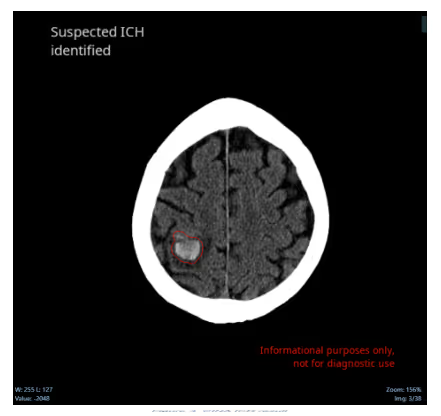
Ferrum Health partners with best-in-class AI providers offering solutions designed to reduce radiology workload and improve patient care.Avicenna Case Study: Improved Care CoordinationHow can CINA improve the coordination of patient care?IntroductionTimely and accurate diagnoses are necessary for the management of acute ICH patients. Unfortunately, 16% of critical findings are never reported to referring clinicians. This drop-in communication intuitively impacts patient care, especially for those with ICH. For example, a subset of ICHs will go on to hemorrhagic expansion, which often occurs within the first 3-4.5 hours of symptom onset.Clinical CaseA 60-year-old patient arrived at the emergency department with left-hand weakness and vertigo. He began taking anticoagulant three days prior for a blood clot in his left leg. An NCCT was ordered and obtained urgently.

A little over two hours after imaging acquisition, the radiologist reviewed the case and report a 1.8 cm acute intraparenchymal hemorrhage within the superior right frontoparietal region. Urgent neurosurgical consultation was recommended as well as further evaluation with MRI brain with and without contrast.
ConclusionCritical findings must be addressed without delay. However, report times for neuro-critical findings on head non-contrast computed tomography (NCCT) examinations can range from 1.5 to 4 hours. The CINA ICH mean time-to-notification is 22s. CINA-ICH drastically reduces the time to radiologist’s review and therefore coordination of care.Note: Segmentation is not currently available for clinical use in the United States. Please see Avicenna outputs documents for more information.Intracranial hemorrhages (ICH) affect over two million people worldwidewith a 40-50% patient mortality rate within one month, and 80% disability despite aggressive care.Quick and accurate early diagnosisof ICH mayfacilitate a prompt therapeutic response, allow fast decision-making, and ultimately improve outcomes.CINA-ICH uses deep learning to identify suspected intracranial hemorrhageand prioritizes those cases in the worklist, dramaticallyreducing turnaround time for head traumaand stroke patients.Interested in deploying CINA-ICH at your health facility? Contact the Ferrum Health team to learn more.